Let’s be real. Somewhere along the way, someone told you lifting heavy would make you bulky. A trainer, a magazine, the internet. And you believed them. Honestly? Same.
Here’s the thing: that advice was never built for us. And in perimenopause, it’s exactly backwards.
So let’s rewrite the script on what heavy actually means (and what it looks like in this body), why your bones, muscle and metabolism are asking for it right now, and why strength on its own isn’t the whole story. Never lifted before? Good. This one’s for you too.
What “Heavy” Actually Means
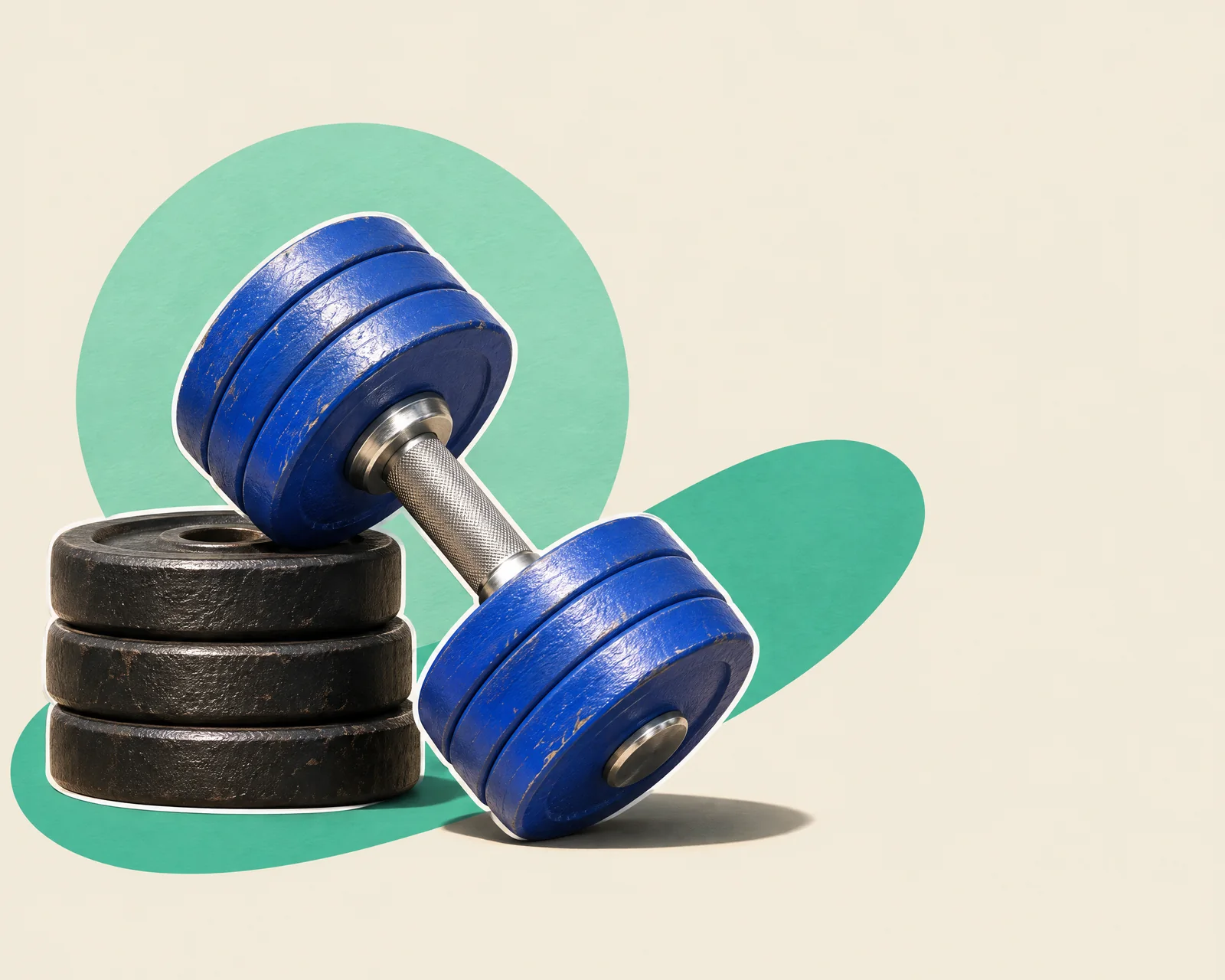
Heavy doesn’t mean a barbell the size of a car. It means heavy for YOU. A weight where the last rep or two of a set is genuinely hard, but your form still holds.
For context, the women in the LIFTMOR trial worked up to 5 sets of 5 reps at more than 85% of the most they could lift once (LIFTMOR). That’s the research version of heavy. You build up to it. You don’t start there.
Why It Matters More Now (Osteo)
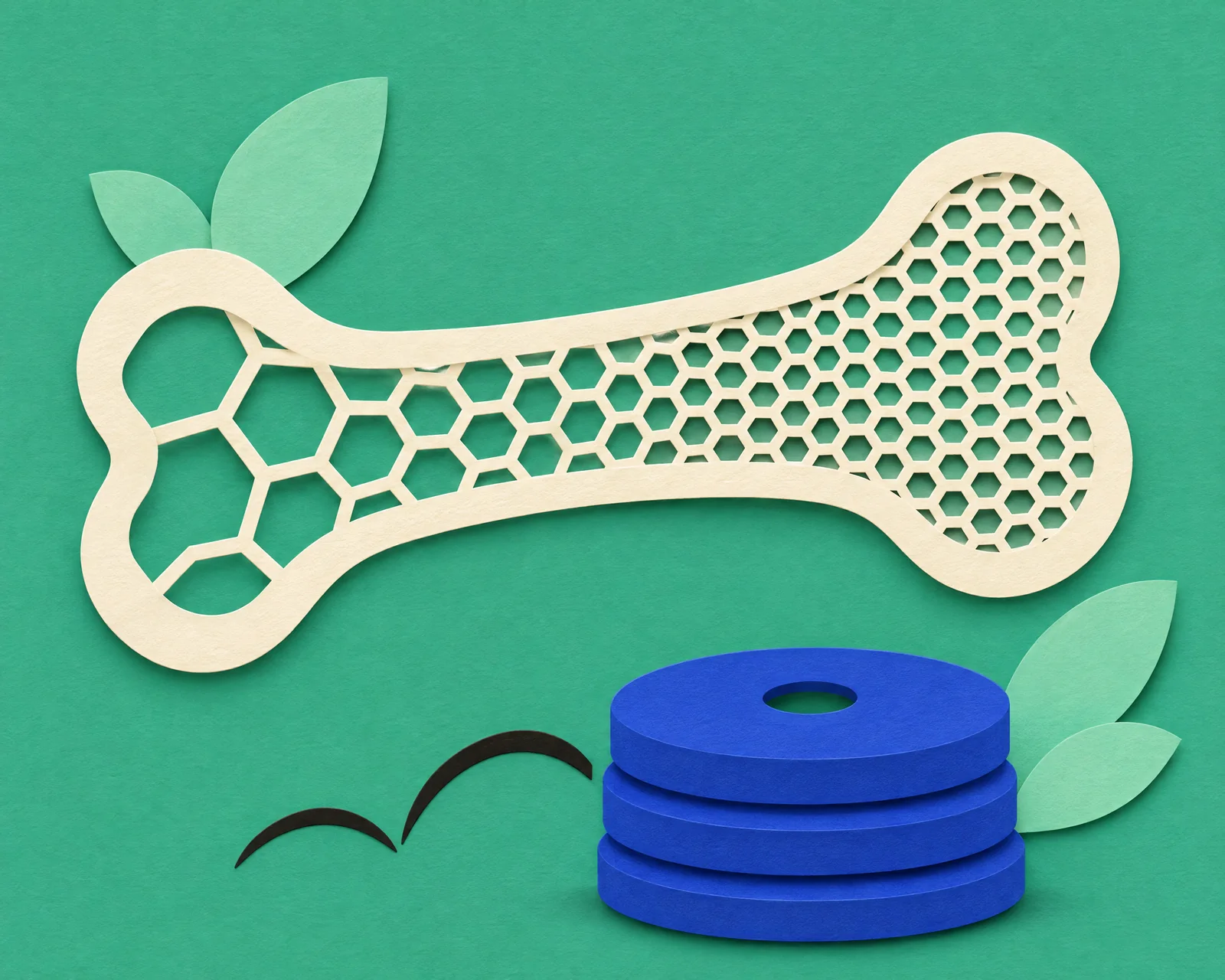
Estrogen helps protect your bones. As it declines, bone loss speeds up (Mayo Clinic). And it starts about a year before your final period (SWAN). So perimenopause? Prime time to start lifting heavy.
Now for the good part. In LIFTMOR, 101 postmenopausal women with low bone density, average age 65, were split into two groups. One did 30 minutes of supervised heavy lifting and impact work, twice a week, for 8 months. The other did a low-intensity program at home (LIFTMOR).
- At the spine, the heavy group’s bone density went up 2.9%. The low-intensity group’s went down 1.2%.
- At the hip, the heavy group held steady (up 0.3%) while the low-intensity group lost 1.9%.
- The heavy group also got stronger and moved better on functional tests.
And this was just two 30-minute sessions a week. What does that tell us? We’ve been buying the “frail and fragile” version of aging way too easily. Now we’ve got the science to push back. And that’s not wellness-speak. That’s a randomized trial.
Your Muscle Is Your Metabolism (Metabolic)
Muscle isn’t just for looking strong. It clears about 80% of the sugar from every meal (Comprehensive Physiology). More muscle, more engine. And heavy, low-rep work is how you build the strong kind.
Strength vs. Power: You Need Both
Two words that get used like they mean the same thing. They don’t.
- Strength: how much force you can make. Lifting the heavy suitcase.
- Power: how fast you can make it. Getting that suitcase into the overhead bin in one quick move.
Here’s the catch: power declines faster than strength as we age, and losing it raises your risk of falls (fall-prevention review). In a study of 63 postmenopausal women with low bone mass, how powerfully they could jump was linked to their balance. Leg strength and muscle size weren’t (Osteoporosis International).
So heavy and slow builds the base. Fast and explosive keeps it useful. That’s why 432 trains both, every single week.
“Won’t I Get Bulky?”
Short answer: no. (If only it were that easy.)
Heavy sets of five or six reps are classic strength training. Getting big usually takes a lot more volume, on purpose, for a long time. What you’ll get from heavy is strong. And honestly? Strong looks great on us. This is us rewriting the storyline, gals. And it’s about time.
How to Start Without Getting Hurt
- Start lighter than you think: Learn the move first. Weight comes second.
- Add a little at a time: Same move, same muscle group, a few more pounds. That’s progress you can actually see.
- Rest properly: Heavy sets need a real rest in between. Think one to two minutes when you’re starting out, and longer as you get stronger (Sports Medicine, 2018). Recovery is part of the work.
- Check in first if you need to: Osteoporosis, a past fracture or a cranky joint? Talk to your doctor or a physio before you go heavy. LIFTMOR was closely supervised, and that matters (LIFTMOR).
How We Do It in 432
Every week of 432 includes heavy, low-rep lifts like deadlifts, squats, presses and rows, with real rest between sets. And it brings the power too, with jumps and short all-out efforts. Strength and power, every single week.
And when you repeat a workout, you go heavier. Same move, more weight. You’ll literally watch yourself get stronger.
We’re the first generation with real data on what our bodies actually need in midlife. Our moms didn’t get that. We do. That’s huge. So let’s do something powerful with it.
Everyone treats the symptoms. Nobody trains the systems. We do.
Heavy for you. Not heavy for anyone else.